Executive HR & Payroll Compliance Leadership for Growing Organizations
Talent Konnections provides Fractional HR and Payroll Compliance leadership for Ontario organizations that have outgrown internal HR but are not ready for a full-time executive.We help organization reduce risk. Protect leadership. Scale with confidence.
Our services

Most HR Consultants
Focus on administrative tasks Offer hourly or project work Provide general HR support

Talent Konnections
Executive-level Fractional HR leadership Integrated HR + Payroll compliance expertise Ontario-focused regulatory knowledge Audit-ready systems and documentation CRA Payroll Compliance Nonprofit Workforce Management Professional certifications and ongoing credential advancement Limited client partnerships for dedicated support
Professional Credentials
PCP – National Payroll Institute • APHR – HRCI • HRPA Member • CHRL – HRPA CPM – National Payroll Institute • CHRE Candidate • PLP Candidate Bachelor’s Degree in Human Resources & Industrial Relations, Carlson School of Management, University of Minnesota
Performance Management
Our service offers comprehensive performance management solutions, including regular appraisals, development planning, and feedback mechanisms, tailored to meet your business needs. We help with Performance appraisal system setup, Goal setting and performance tracking, Coaching and development plans, Succession planning

HR Policy & Procedures
Our 'HR Policy & Procedures' service provides comprehensive guidance and support in formulating, implementing, and managing human resources policies tailored to your organizational needs. We ensure compliance with regulations, alignment with industry standards, and promotion of a productive workplace environment. We help organization develop Compliance , HR policy & procedure manuals, Employment standards compliance (e.g., labour laws, OHSA), Workplace harassment and discrimination policies, and Health & safety program development

Workforce planning & organizational structure
Our Workforce Planning & Organizational Structure service offers comprehensive solutions to optimize staff allocation and align organizational structures with business objectives. We assist in workforce analysis, strategic planning, and designing efficient organizational charts that foster productive work environments and goal achievement. Our HR Administration and Employee records management includes, Benefits administration support, HR reporting and analytics, and HR software implementation and support.

Compensation Benchmarking & Benefits Strategy
We provide a comprehensive analysis of industry compensation trends and assist in crafting a tailored benefits strategy to attract, retain, and motivate top talent within your organization.

Training & policy recommendations
Our team analyzes your current DEI initiatives, gathers feedback from stakeholders, and develops actionable policy improvements to foster equity in your organization. Our Training & Development includes, Leadership and management training, Skills development workshops, Diversity, Equity & Inclusion (DEI) training, Compliance and regulatory training.

Customized risk mitigation & crisis management plan
Our 'Customized Risk Mitigation & Crisis Management Plan' offers tailored strategies to identify, assess, and manage potential risks effectively. Enhance organizational resilience and readiness for diverse scenarios with our expert-designed approach.
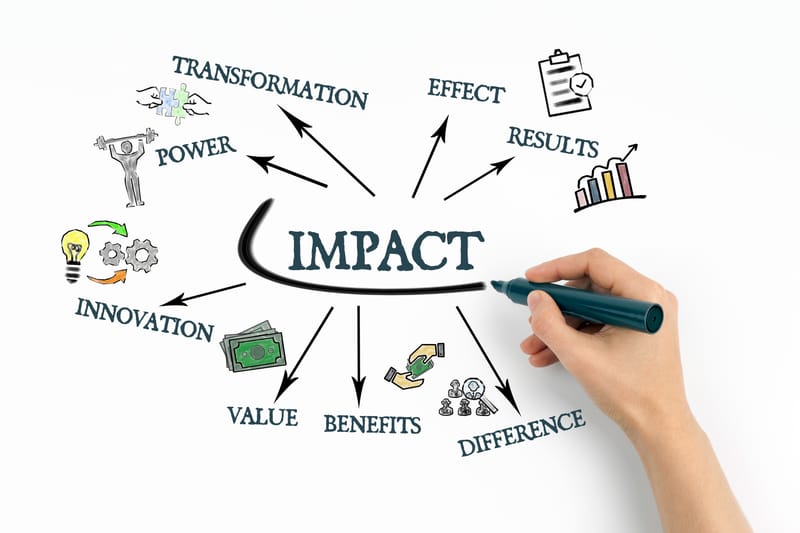
Change management & communication plan
We assist organizations in effectively managing change by developing tailored change management and communication plans, ensuring smooth transitions and team alignment.
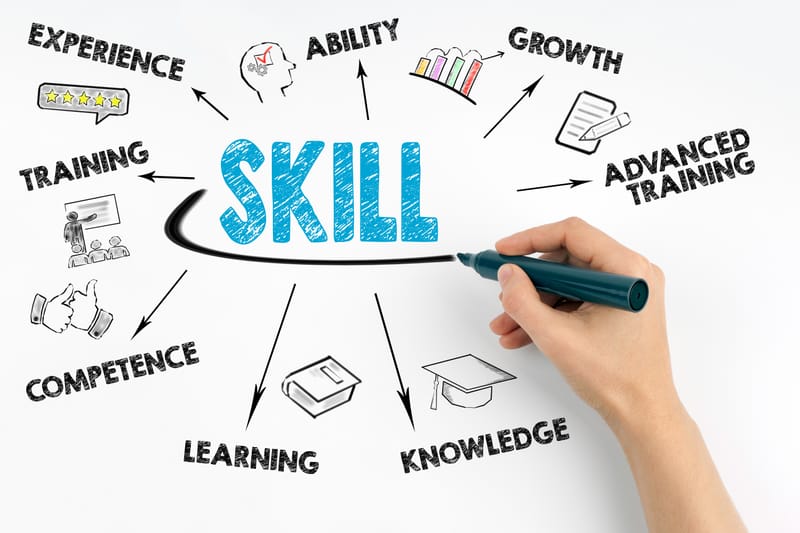
Leadership coaching & development plan
Our program offers tailored leadership development plans and coaching to empower individuals in management roles to lead with confidence and efficacy.

Employee Relations
We provides oversight and recommendations on policies and practices to enhance employee satisfaction and organizational performance. Our service includes, conflict resolution & mediation, Employee engagement programs, Exit interviews and offboarding, and Employee satisfaction surveys and analysis
Book an Executive HR/Payroll Assessment
Articles
The penalty structure for late remittances escalates quickly: Days Late 1–3 days 3% 4–5 days 5% 6–7 days 7% More than 7 days 10% Repeat offences or gross negligence Up to 20% Interest compounds daily on overdue amounts at the prescribed rate plus 4%. For Q4 2025, the prescribed rate for overdue remittances is 7%.Late-filled T4 slips carry separate penalties starting at $100 per slip type, up to $2,500 per type.
Read More
The most important distinction is that trust examinations carry a unique risk: director’s personal liability. A regular income tax audit does not typically expose directors to personal liability for corporate tax debts, but a trust examination can if source deductions were withheld but never remitted.
Read More
Table: Key differences between a CRA trust examination and a regular tax audit. The most important distinction is that trust examinations carry a unique risk: director’s personal liability. A regular income tax audit does not typically expose directors to personal liability for corporate tax debts, but a trust examination can if source deductions were withheld but never remitted.
Read More
Trust examinations and PIER reviews are serious enforcement mechanisms, but they are largely preventable. The CRA has increasingly emphasized education and assisted compliance alongside enforcement the agency wants employers to get it right. Your best protection is disciplined payroll processing: accurate calculations using current rates, careful T4 preparation, regular reconciliation of remittances, and meticulous record-keeping. For directors, the stakes are personal the trust money withheld from employee paycheques is not yours and using it for any purpose other than remittance to the CRA can trigger liability that no corporate structure will shield you from. Review your payroll practices against the standards outlined here, address gaps before year-end, and treat every remittance deadline as non-negotiable.
Read More
Critical note: Payments must be received by the CRA by the deadline, not merely sent. Penalties escalate quickly: 3% for 1-3 days late, 5% for 4-5 days, 7% for 6-7 days, 10% after 7 days, and 20% for repeated failures—plus compound daily interest at roughly 9-10% annually. Directors can be held personally liable for unremitted amounts with no limit under the Income Tax Act.
Read More
Record of Employment (ROE) An ROE must be issued whenever an employee experiences an “interruption of earnings” seven or more consecutive calendar days with no work and no insurable earnings. This includes terminations, layoffs, resignations, and leaves. Electronic ROEs must be filed within five calendar days after the end of the pay period in which the interruption occurred: paper ROEs within five days of the first day of interruption. Employers issuing five or more ROEs annually must file electronically through ROE Web. Later filing penalties reach $2,000 per infraction.
Read More
Disclaimer: This article provides general tax information. Tax rules change frequently, and individual circumstances vary. Consult a qualified Canadian tax professional for advice specific to your situation.
Read MoreTestimonials
Contact
- 4544 HEPPARD AVE EAST
- +1-4167169425 - TALENT KONNECTIONS LTD.
- info@talentkonnections.com
- Mon-Fri - 09:00-17:00
Our Head Office is located in Toronto
book now
HR Policy & Procedures
MOST POPULAR
- Access a comprehensive service that offers detailed guidelines and clear protocols for your HR policies and procedures. Ensure effective communication within your organization by booking a personalized appointment with our expert team. Streamline your HR processes and enhance your workplace operations with our professional services.
PAYROLL SERVICES
MOST POPULAR
- Cross border payroll! our Canadian & USA payroll services is where efficiency meets excellence in payroll processing. Leave the complexities of compliance with Canadian & USA regulations to our expert team, ensuring accuracy and peace of mind for your business. Experience top-notch service with our dedicated customer support, tailored to meet your unique needs seamlessly. Book your appointment now to streamline your payroll operations and witness firsthand the professionalism and reliability that sets us apart in the industry. Trust us to handle your payroll services with precision and care, so you can focus on what truly matters – growing your business. We will run your payroll for you just how you like it, always on time. We provide high quality payroll services for small to medium size businesses
- •Professional payroll system setup with professional reports
- •Payroll setup and preparation
- •Free initial consultation about your payroll requirements
- •CPP, EI, income tax, T4, W2, and WSIB remittances and all statutory deductions included
- •Third party payments included
EMPLOYMENT CONTRACTS & FORMS
MOST POPULAR
- Enhance your business with our professional Employment Contracts & Forms service. Our comprehensive templates are legally binding and easy to customize to suit your specific needs. Book your appointment now to secure expert guidance and ensure your employment agreements are in compliance with the latest regulations.
Human Resources Management
MOST POPULAR
- Enhance your business operations with our premium Human Resources Management service. Book a one-on-one appointment with our expert consultants to streamline your HR processes, optimize employee performance, and foster a positive work environment. Take the first step towards organizational success by scheduling your consultation today!
Forms & Applications Support Services
MOST POPULAR
- We help you with personalized assistance with Forms and application. Our team is dedicated to guiding you through each step, ensuring a seamless and hassle-free experience. Book an appointment today to receive tailored support and make the process smoother than ever before.
Overcoming HR Challenges
MOST POPULAR
- HR management can be challenging, but our expertise helps navigate these obstacles effectively. Managing human resources comes with its unique set of challenges, ranging from talent retention to compliance with labor law. Understanding these challenges and developing effective strategies to address them is crucial for maintaining a strong and motivated workforce. Here are some common challenges and how we can help you address them:
- • Talent Retention
- • Compliance with Regulations
- • Workplace Diversity
- • Adapting to Change
- • Managing Remote Work
Millennial Consultant
MOST POPULAR
- Our approach is to help small and mid-sized communities attract and keep the next generation of young professionals. We help rural communities where baby boomers are nearing retirement age with the cities often competing with large, metropolitan areas that offer greater diversity, entertainment venues, cultural opportunities, and career options. We will help you learn how to market to this unique group to build a future workforce. Our Millennial consultants will help you understand this target demographic building work relationships and bridging the communication gap between the multi-generations of workers.
Performance Management
MOST POPULAR
- We will Implement effective performance appraisal systems to monitor and enhance employee productivity by...
- • Assessment: Conducting a thorough assessment of your current HR practices and needs.
- • Planning: Developing a customized HR strategy based on the assessment.
- • Implementation: Executing the HR strategy through various initiatives and programs.
- • Monitoring: Continuously monitoring and evaluating HR initiatives to ensure they meet desired outcomes.
- • Review and Adaptation: Reviewing outcomes and adapting strategies as needed. Benefits: Flexibility, continuous alignment with business needs.
Recruitment and Talent Acquisition
MOST POPULAR
- Enhance your recruitment and talent acquisition strategies with our professional service. From strategic hiring techniques to talent retention solutions, we provide expert guidance tailored to your organization's needs. Book an appointment now to streamline your diverse recruitment processes and elevate your workforce to new heights.
Compliance & Audit
MOST POPULAR
- HR Technology Implementation: Assistance with setting up HRIS or payroll software.
- Diversity, Equity, and Inclusion Initiatives: Customized programs to promote workplace inclusivity. DEI assessment & policy recommendations
- HR and Payroll compliance audit & gap analysis
- Workforce planning & organizational structure review
- Compensation benchmarking & benefits strategy
- Change management & communication plan
- Payroll system review & technology integration consulting
- Leadership coaching & development plan
- Customized risk mitigation & crisis management plan
- Ad Hoc Consulting Support: On-demand advice and support for unexpected Consulting challenges.
Customers